
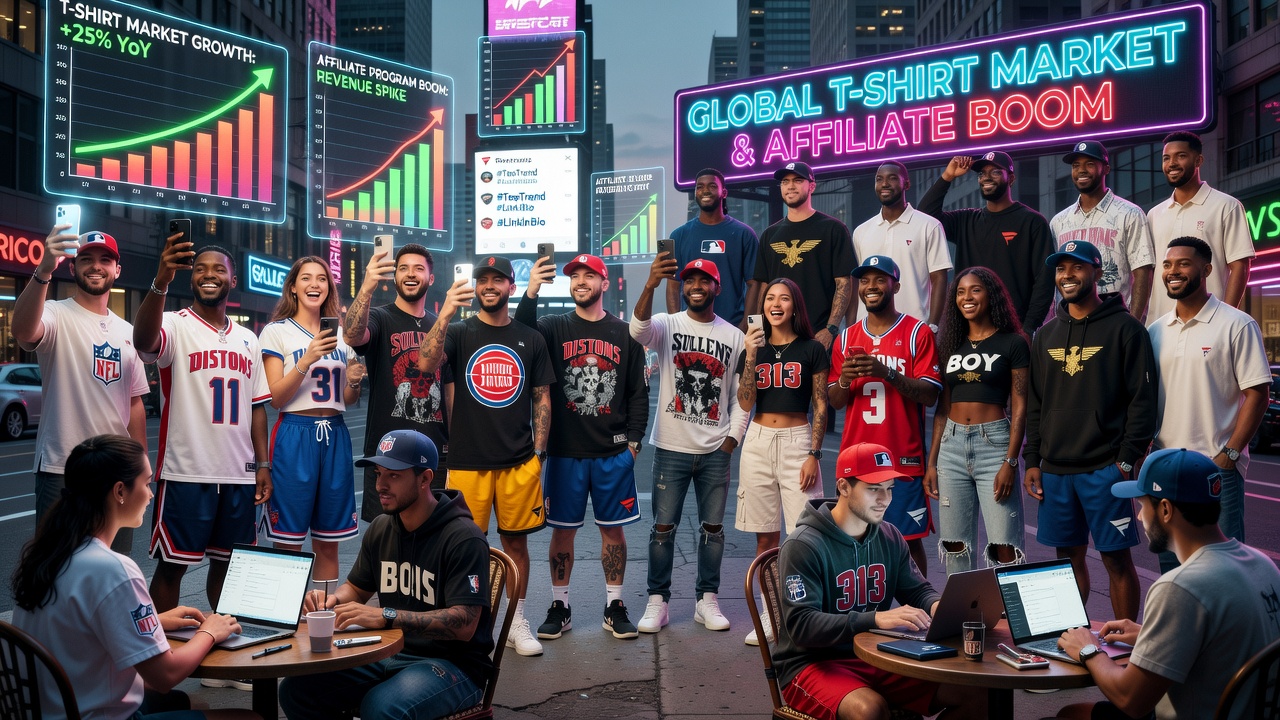
The apparel category built around a single garment is quietly becoming one of the more resilient corners of e-commerce. Valued at roughly $3.64 billion in 2023, the global T-shirt industry is projected to climb to about $5.14 billion by 2029, a compound annual growth rate of 5.6%. That steady expansion has created a parallel opportunity: a growing ecosystem of affiliate programs built around apparel brands, sports merchandise retailers, streetwear labels, and niche fashion houses.
Why Apparel Affiliate Programs Are Multiplying
Affiliate marketing works well in apparel because the purchase cycle is short, the price point is accessible, and brand loyalty runs deep, particularly in categories like sports merchandise and streetwear. Retailers such as Fanatics, which sells officially licensed NFL, NBA, MLB, and NHL gear, or team-specific shops like Pistons 313, rely on affiliates to reach fragmented fan communities that are difficult to target through conventional advertising. Niche labels such as Sullen Clothing or BOY London lean on affiliates with built-in audiences in tattoo culture, music, or streetwear, where authenticity matters more than broad reach.
Commission Structures Vary Widely
Unlike flat-rate loyalty schemes, apparel affiliate commissions differ significantly by brand positioning and margin. Mass-market sports retailers tend to offer commissions in the 5% to 8% range, while luxury retailers like Neiman Marcus operate on thinner margins, reflected in lower percentage payouts despite higher average order values. Cookie durations, the window during which a referred sale still counts toward an affiliate's commission, also vary from 7 days to 30 days, materially affecting how much credit an affiliate can expect from a single piece of content or promotion.
- Sports and team merchandise programs generally offer commissions between 5% and 8%, with cookie windows of 7 to 30 days.
- Niche and streetwear brands often sit in a similar commission range but attract smaller, more engaged audiences.
- Marketplace-style platforms, such as those selling children's apparel, can offer higher commission rates near 10%, reflecting lower average order values.
- Luxury retailers typically offer lower percentage commissions but higher dollar amounts per sale due to elevated price points.
What This Means for Affiliates and Brands
For affiliates, the math behind apparel partnerships depends less on the headline commission rate and more on average order value, conversion rate, and how long a cookie stays active. A 10% commission on a $50 item produces less than a 2.4% commission on a $200 luxury purchase. Brands, in turn, benefit from affiliate marketing's performance-based structure: they pay only when a sale occurs, making it a comparatively low-risk acquisition channel compared with traditional advertising spend.
As the T-shirt and broader apparel market continues to expand toward 2029, affiliate programs are likely to remain a core distribution tool, particularly for brands built around community identity, whether that's sports fandom, subculture aesthetics, or family-oriented retail. For marketers evaluating these programs, transparency around commission terms, payout thresholds, and cookie duration remains the clearest indicator of which partnerships are built to last.