
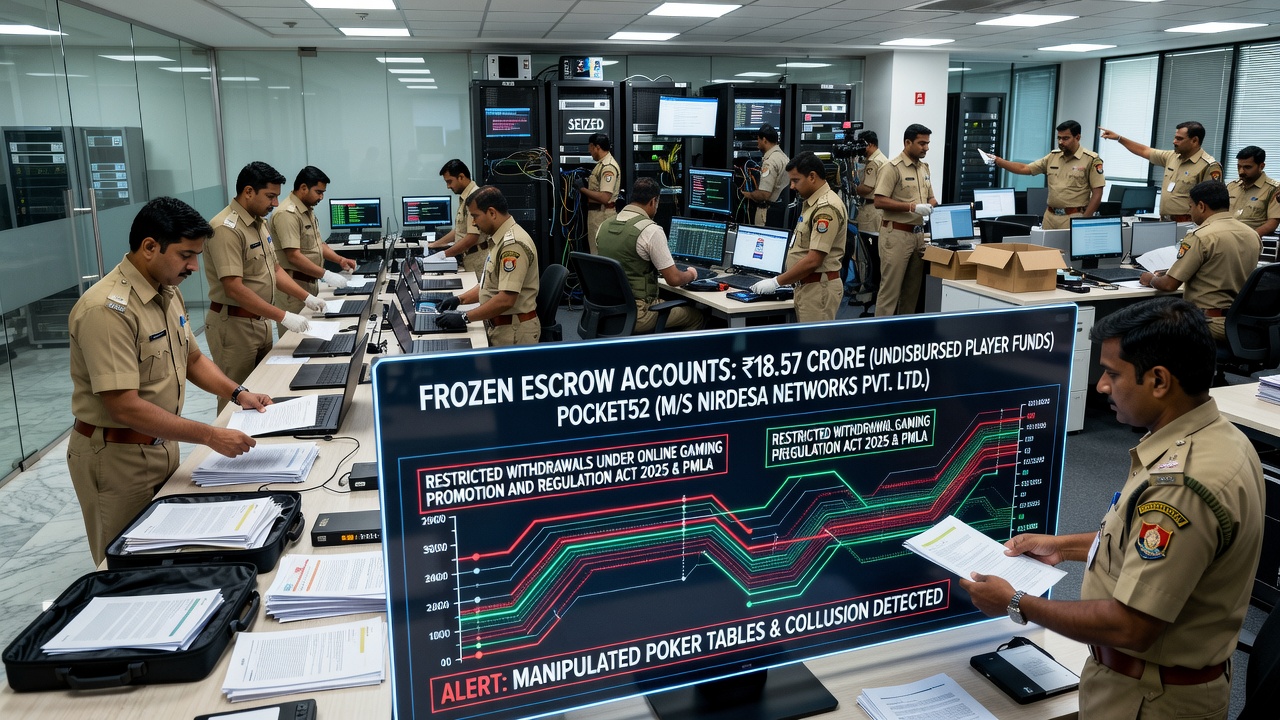
The Enforcement Directorate expanded one of its largest gaming-sector investigations on Thursday, May 7, conducting searches across Delhi-NCR, Bengaluru and other locations tied to an alleged ₹1,000 crore money laundering operation linked to online gaming and betting activity. The operation, carried out by ED's Bengaluru Zonal Office, targeted Gameskraft Technologies Pvt Ltd, its directors, and several individuals connected to the platform's operations.
Investigators reportedly seized documents, digital records and electronic devices during the raids, building on evidence gathered in earlier phases of the probe. The case underscores a broader pattern: as India's real-money gaming sector has grown, so has scrutiny over how these platforms move funds, structure payouts and comply with financial regulations. For readers trying to understand where the legal boundaries actually sit, the question of whether is online gambling legal in india remains complicated, since laws vary by state and by the classification of a game as one of skill or chance - a distinction that continues to shape enforcement actions like this one.
A Second, Distinct Case Against the Same Company
This is not ED's first encounter with Gameskraft. Between November 18 and 22, 2025, the agency had already searched premises in Bengaluru and Gurugram connected to Gameskraft and M/s Nirdesa Networks Pvt. Ltd. (NNPL), the operator behind the poker platform Pocket52. That investigation stemmed from FIRs filed by Karnataka Police alleging manipulated game outcomes, player collusion, restricted withdrawals and a general lack of transparency in how the platform functioned. One complainant alone reportedly claimed losses exceeding ₹3 crore. The current searches, officials clarified, relate to a separate matter - though both cases point to sustained regulatory pressure on the same corporate group.
Escrow Accounts and the Money Trail
Central to the Pocket52 case is the handling of user funds held in escrow. Under the Online Gaming Promotion and Regulation Act, 2025 (PROG Act), platforms are required to maintain clear, accessible mechanisms for returning player funds. ED alleges that despite restrictions imposed under the Act, more than ₹30 crore remained undisbursed in escrow accounts. The agency has since frozen eight such accounts holding an estimated ₹18.57 crore, treating the funds as suspected proceeds of crime under the Prevention of Money Laundering Act (PMLA). This mechanism - freezing escrow holdings rather than only pursuing individuals - reflects how financial investigators increasingly treat gaming platforms as regulated money-handling businesses, not just entertainment products.
Why This Matters Beyond One Company
The case illustrates the structural risks embedded in India's fast-growing online gaming economy. Platforms handling large volumes of player deposits face mounting expectations around algorithmic fairness, withdrawal transparency and fund segregation. When complaints of manipulated outcomes or blocked withdrawals surface, they don't just damage user trust - they can trigger criminal investigations that reach into escrow structures, corporate directors and cross-border fund flows. For operators, the message is clear: compliance with PMLA and emerging gaming-specific legislation like the PROG Act is no longer optional infrastructure but a core operational requirement, with real consequences for founders and financial intermediaries alike.