
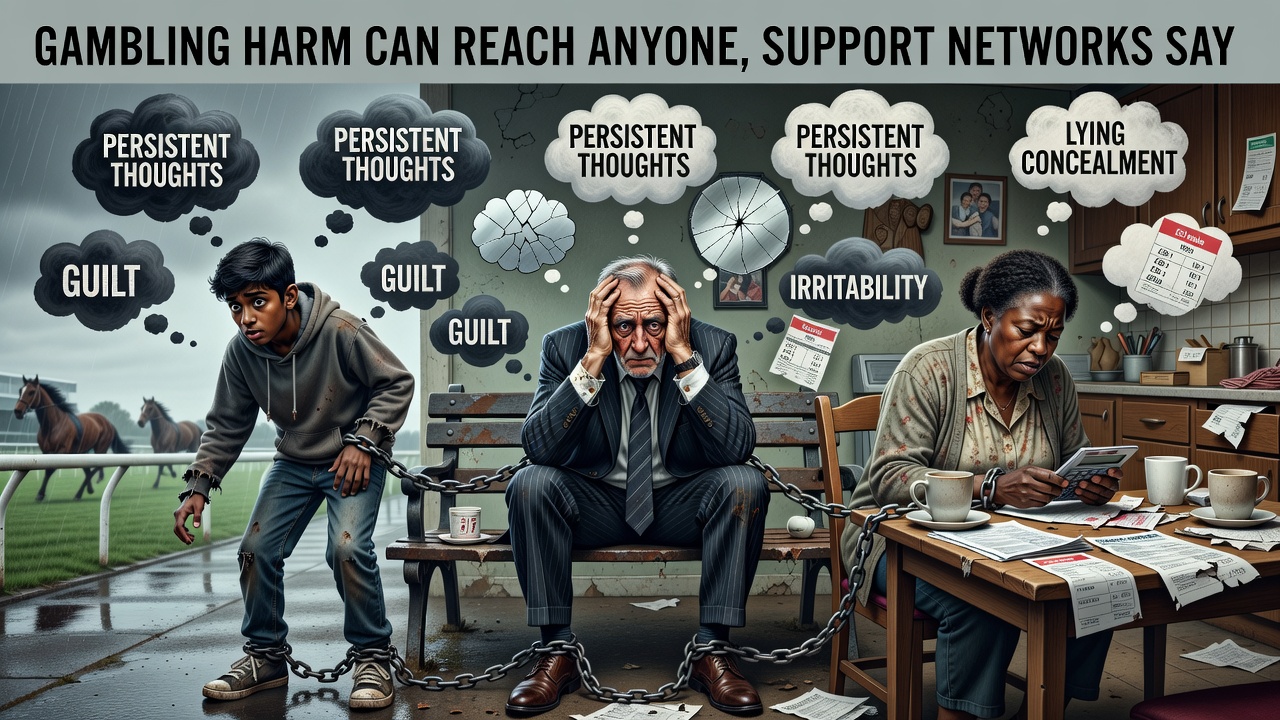
Gambling-related harm does not discriminate. It can affect a teenager placing his first bet, a retired professional with decades of financial discipline, or a parent managing a household budget. Support organisations across the UK are increasingly emphasising this point: the damage caused by gambling is not confined to any particular age group, income bracket, gender, or cultural background, and it rarely announces itself until real consequences have already taken hold.
How Harm Develops and Spreads
Gambling harm is rarely just a financial matter. It tends to move outward from the individual into every part of their life. Debt accumulates quietly at first, then more visibly. Employment can suffer as concentration and reliability decline. Relationships strain under the weight of secrecy, and in some cases, criminal activity emerges as a desperate attempt to cover losses. Mental and physical health often deteriorate in parallel, with anxiety, depression, and sleep disruption commonly reported alongside financial distress.
What makes this pattern difficult to detect early is that it does not follow a single script. Some people gamble heavily but discreetly for years before anyone notices. Others show visible warning signs almost immediately. This variability is precisely why blanket assumptions about who is "at risk" are unhelpful, and why awareness of behavioural signs matters more than demographic profiling.
Recognising the Warning Signs
Certain patterns of behaviour tend to recur among people experiencing gambling harm, whether they recognise it in themselves or in someone close to them. These include:
- Spending increasing amounts of time or money on gambling activity
- Persistent thoughts about gambling, even during unrelated tasks
- Feelings of guilt, anxiety, or irritability tied to gambling behaviour
- Noticeable changes in relationships with family, friends, or colleagues
- Lying, concealment, or denial about the extent of gambling activity
None of these signs alone confirms a problem. Together, and over time, they form a pattern that is difficult to ignore. Recognising this pattern early, in oneself or in someone else, is often the first practical step toward addressing it before harm compounds further.
Where Support Fits Into the Picture
The UK has built a layered support infrastructure specifically because gambling harm affects people so differently. Some organisations, such as Beacon Counselling Trust, offer free and confidential support directly to individuals affected. Others, like GamCare, extend that support to family members and friends who are navigating the fallout of someone else's gambling, and operate a helpline that runs continuously throughout the week. The NHS Northern Gambling Service takes a clinical approach, treating gambling harm alongside any co-occurring mental health conditions rather than in isolation. Gamblers Anonymous, meanwhile, relies on peer support through open meetings requiring no prior appointment.
This range of options reflects a broader shift in how gambling harm is understood across the sector: not as a single condition with one treatment path, but as a spectrum of experiences requiring different kinds of intervention, from clinical treatment to peer fellowship to confidential helplines.
A Personal Account, and a Broader Lesson
David Smith's story, beginning with a win at the races and ending in a prolonged struggle with addiction, illustrates a pattern familiar to support services: an early positive experience can create a psychological association between gambling and reward that persists long after losses accumulate. His account, and others like it, underline why screening tools and early conversations matter. They exist not to diagnose definitively, but to prompt reflection before harm becomes entrenched. For anyone unsure whether their own gambling, or that of someone close to them, has crossed into harmful territory, these resources offer a starting point grounded in confidentiality rather than judgment.