
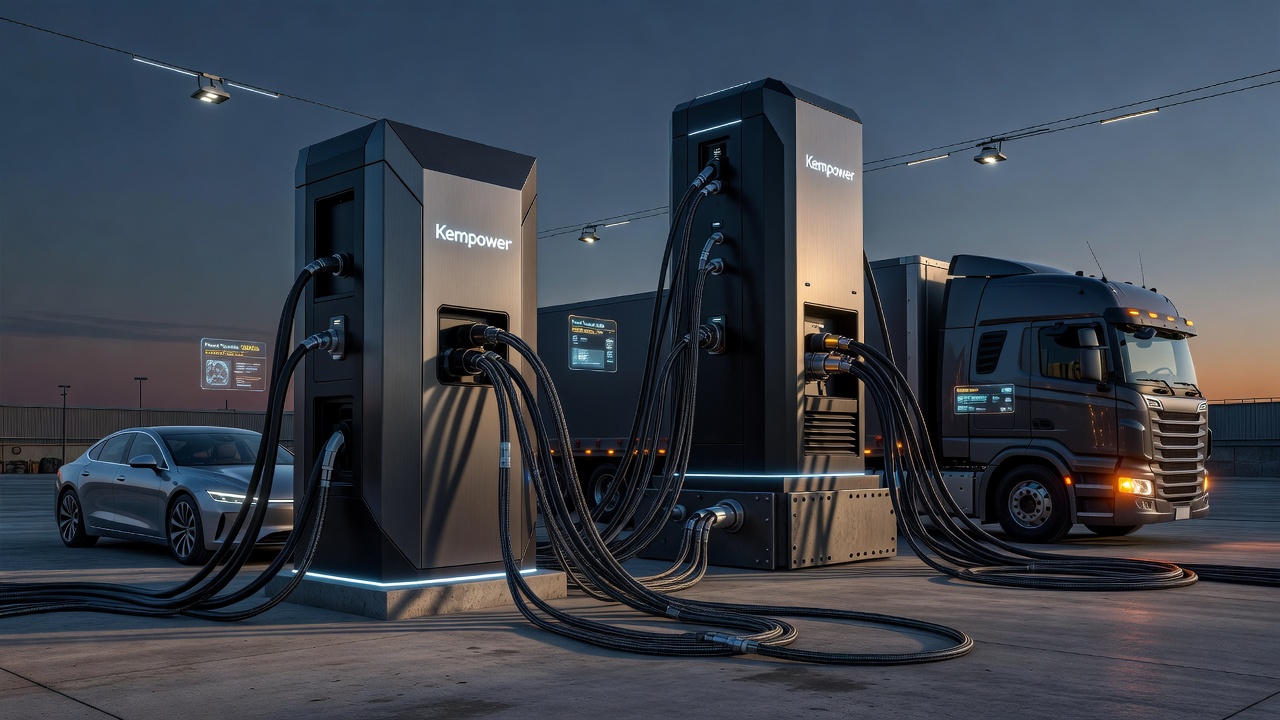
Kempower has introduced the Mega Satellite Flex, a charging dispenser that can deliver either CCS charging up to 560 kW or megawatt-level charging up to 1.2 MW from the same unit. The Finnish charging manufacturer unveiled the product this week at ACT Expo during its Unplug & Recharge event, aiming squarely at the widening gap between passenger EV infrastructure and the emerging needs of electric heavy-duty trucks.
The timing reflects a genuine industry crossroads. CCS (Combined Charging System) remains the standard powering most electric cars on the road today, while the Megawatt Charging System, or MCS, is a newer protocol designed specifically for the enormous energy demands of electric trucks and buses. Building separate sites for each standard has been the default approach, but it's expensive and slow to scale. For readers trying to make sense of how charging standards affect everyday decisions, a practical overview of how emerging technology standards get adopted can help frame why compatibility choices like this one matter beyond the trucking industry alone.
One Site, Two Standards
What makes the Mega Satellite Flex notable isn't raw power alone - plenty of chargers already push high kilowatt figures - but the fact that it collapses two separate buildouts into one. Operators of truck stops, logistics hubs, or mixed-use charging plazas no longer need to guess which standard will dominate or install duplicate hardware to hedge their bets. The unit supports up to 1,500 amps on the MCS side and 700 amps for CCS, with cable lengths tailored to each use case: 5 meters for CCS and a shorter 2.7 meters for MCS, reflecting the different vehicle geometries involved.
The charger also accommodates 800-volt electrical architectures now appearing in newer EVs, which can draw power faster than older 400-volt systems allow. That forward compatibility matters because vehicle platforms tend to outlast the charging infrastructure built around them, and operators who install equipment locked into older voltage assumptions often find themselves needing costly upgrades within a few years.
Why Utilization Drives the Business Case
Charging hardware is a capital-intensive investment, and the return depends heavily on how often each unit gets used. A dispenser that only serves passenger cars sits idle during hours when truck traffic peaks, and vice versa. By serving both vehicle classes from a single point, Kempower argues operators can push utilization rates higher from the moment a site opens, rather than waiting years for either car or truck demand alone to justify the investment.
The Mega Satellite Flex is also designed to slot into Kempower's existing distributed charging architecture, meaning operators already running Kempower systems can add the new dispenser without redesigning their electrical backbone. That compatibility lowers the barrier to adoption for companies that have already committed capital to the company's platform.
What Comes Next
The charger is expected to reach North American and European markets in July 2026, giving the trucking and charging industries roughly a year to prepare sites, permitting, and grid connections. MCS infrastructure is still in its early stages, and standardization efforts are ongoing, so early movers in this space are effectively betting on where the technology settles. Whether megawatt charging becomes as universal for trucks as CCS became for cars remains an open question, but hardware that hedges against that uncertainty gives operators room to adapt as the answer becomes clearer.