
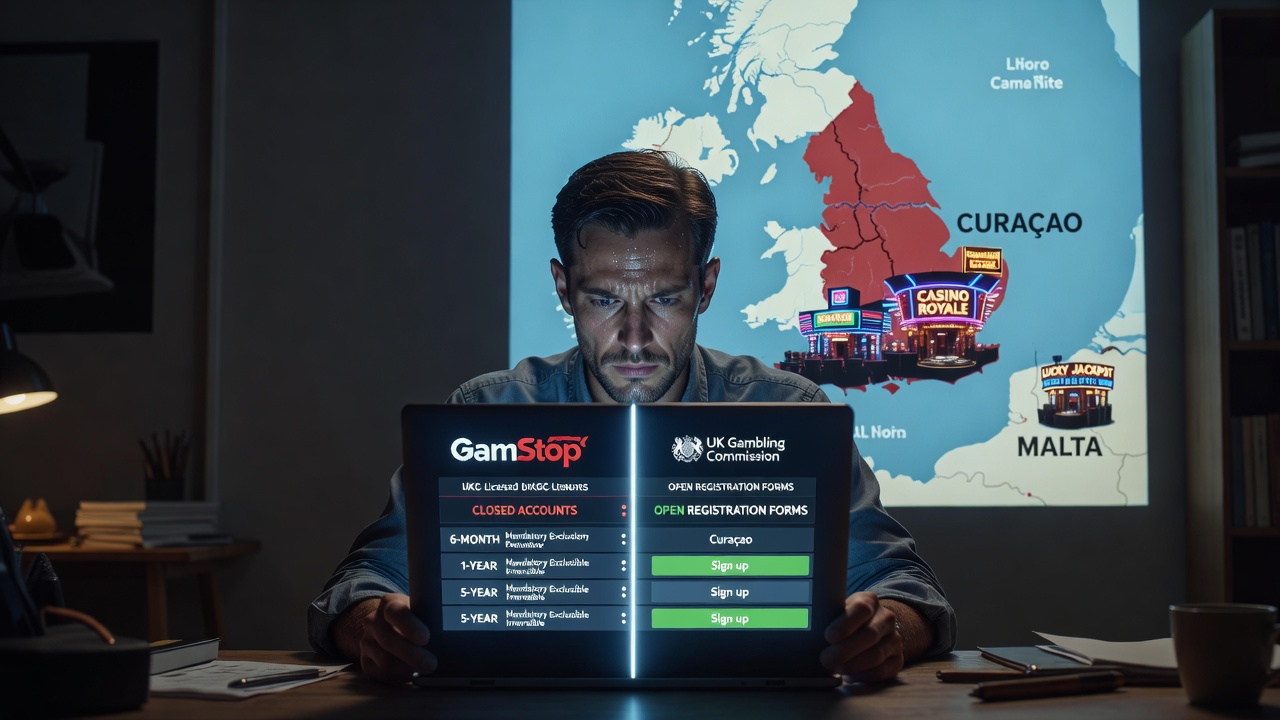
GamStop blocks access to every UK-licensed betting and casino site, but it stops at the border of the Gambling Commission's own jurisdiction. Casinos licensed in Curaçao, Malta or elsewhere are under no obligation to recognise a UK self-exclusion order, and that gap has real consequences for anyone trying to step back from gambling. Understanding where the national scheme ends - and what protections, if any, exist beyond it - matters more than most players realise until they go looking for them.
The Boundary of GamStop
GamStop was built as a free, UKGC-backed register: sign up once, and every licensed operator in Britain is instructed to close your account and refuse new registrations. Exclusion periods run for six months, one year or five years, and none of them can be reversed early - a deliberate design choice meant to remove the temptation to cancel mid-relapse. The scheme's authority, however, is contractual rather than territorial. It reaches operators who hold a UKGC licence and nothing beyond that. Offshore sites are not acting illegally by remaining outside it, and UK law does not bar adults from accessing gambling services licensed in other countries. But a self-exclusion taken out because gambling has become a problem loses its purpose the moment someone opens an account elsewhere to keep playing.
What Offshore Operators Offer Instead
Reputable offshore casinos typically build their own responsible-gambling tools, even without GamStop's oversight. These generally include deposit and loss limits, session timers, reality-check pop-ups, cooling-off periods and a site-specific self-exclusion option. The distinction is important: closing an account on one offshore platform does nothing to prevent opening another the next day. Each exclusion is isolated to that operator, which places more of the burden on the individual player to act consistently across every site they use, rather than relying on a single national block to do the work.
- Deposit and loss limits cap spending regardless of how many separate transactions are made.
- Session limits and reality checks address time spent rather than money.
- Cooling-off periods offer a short pause without a full account closure.
- Self-exclusion requests should be confirmed in writing and that confirmation kept on file.
Controls Outside the Casino Account
A second layer of control sits with payment providers rather than operators. Several UK banks now let customers block card payments to gambling merchants directly through their banking app - a control that applies whether the destination site is UKGC-licensed or not, because it works at the card level. Prepaid cards and some e-wallets offer similar limits set independently of any casino's own settings. These tools matter precisely because they don't depend on an offshore operator's goodwill or licensing conditions; they sit with the bank or payment provider instead.
Recognising When to Seek Help
Problem gambling rarely announces itself through the size of a loss alone. Chasing previous losses, hiding activity from family, irritability when unable to play, or needing progressively larger stakes for the same effect are more reliable warning signs than any single bad session. Free, confidential UK support is available regardless of where someone gambles: GamCare's National Gambling Helpline (0808 8020 133, 24/7), BeGambleAware, Gamblers Anonymous and Gambling Therapy all operate without referral and without judgment. For anyone weighing whether to use an offshore site to work around an existing GamStop exclusion, a conversation with one of these services first is worth the delay.