
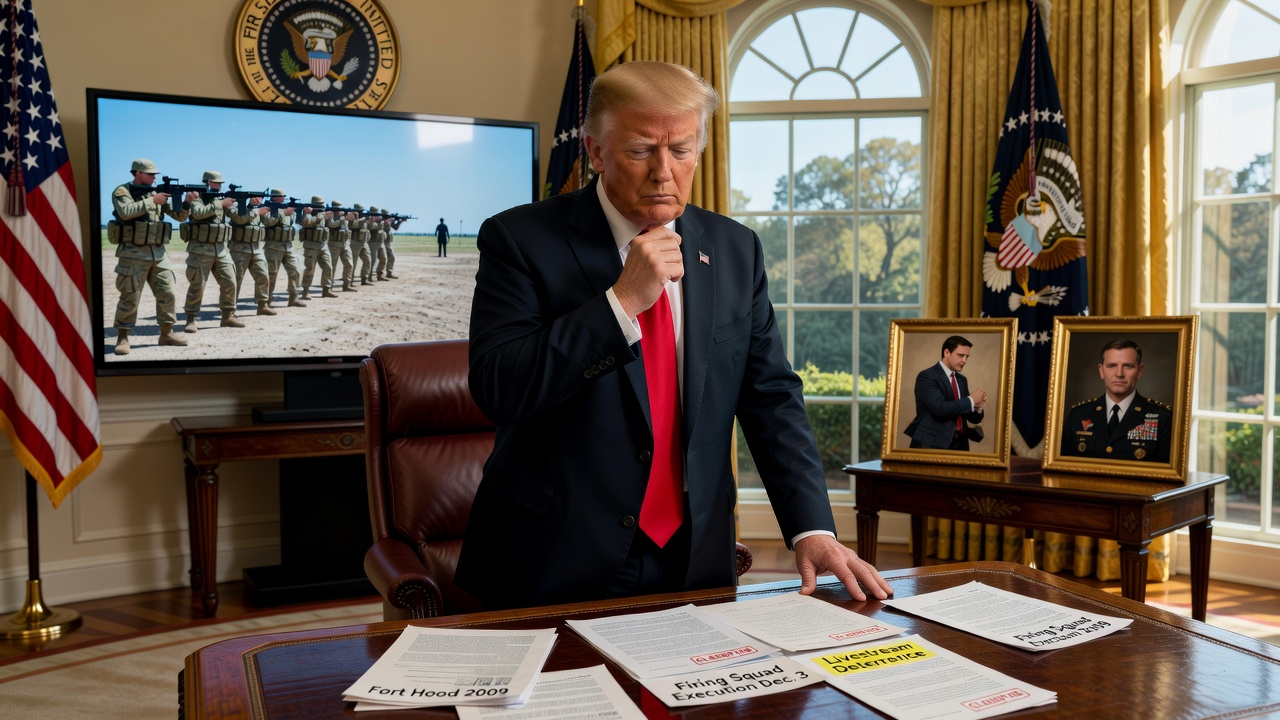
President Donald Trump said Saturday he has not yet decided whether to allow the livestream of the firing squad execution of Nidal Malik Hasan, the former Army major convicted of killing 13 people and wounding 32 others in the 2009 Fort Hood attack. The Pentagon has told Fox News Digital the execution is scheduled for Dec. 3 and was planned to be broadcast live. If it proceeds as outlined, it would mark the first U.S. military execution since 1961 and the first by firing squad since 1945.
A decision still pending
Trump told reporters at the White House he is weighing two competing arguments. "There are two thoughts: don't show it and show it," he said, suggesting that broadcasting the execution might serve as a deterrent. He stressed that no final call had been made, even though he had earlier approved the use of an Army firing squad following a recommendation from War Secretary Pete Hegseth. A day before his Saturday remarks, Trump said he had not been involved in the decision to livestream the event but understood the rationale, noting the military wanted it to "serve as an example."
Vice President JD Vance added a note of personal distance from the matter, telling reporters he was uncertain whether the livestream would happen and that he personally would not watch if it did. The mixed signals from the administration underscore that the format of the execution remains unsettled even as the date has been set.
Why this is historic and contested
The method and manner of this execution break sharply with recent precedent. The U.S. military has not carried out a death sentence in more than six decades, and firing squads have not been used by the armed forces since the end of World War II. Modern executions in the United States, whether civilian or military, are typically conducted by lethal injection and are not broadcast to the public. A livestream would represent a significant departure from standard practice in how capital punishment is handled and communicated.
Supporters of transparency argue that public visibility of state punishment can inform civic debate about the death penalty itself. Critics counter that broadcasting an execution risks turning a somber legal act into spectacle, raises questions about dignity and decorum, and could have unpredictable psychological effects on viewers, including the families of victims and the condemned. These tensions are not new to capital punishment debates, but they take on added weight when the proposed method of dissemination is a live video feed rather than a written report or witness account.
What broader audiences should take from this
The case sits outside the usual territory of gambling, gaming, or consumer technology coverage, but it intersects with questions familiar to anyone who follows platform governance and content moderation: who controls the distribution of graphic or disturbing material, what safeguards exist for unintended audiences, and how institutions balance claims of deterrence or transparency against the risk of normalizing violence as content. Whatever Trump ultimately decides, the episode will likely shape how future high-profile executions are documented and discussed, and it raises fresh questions about where lines should be drawn between public accountability and public spectacle.