
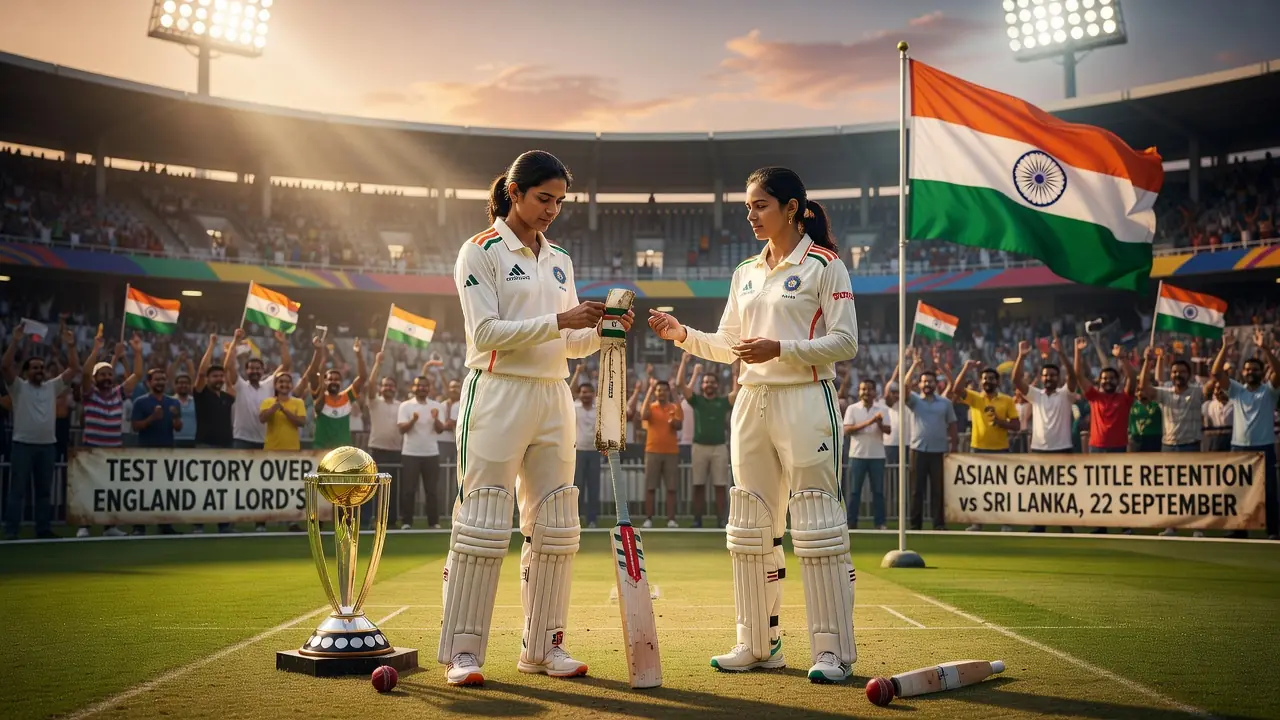
Harmanpreet Kaur has relinquished the captaincy of India's women's cricket team across Tests, one-day internationals and T20 internationals, ending a tenure that reshaped the sport's standing in the country. The 37-year-old's final match in charge came on 22 September, when India retained their Asian Games title against Sri Lanka. Her departure closes a chapter that included India's first global trophy and opens an uncertain period of transition for one of cricket's fastest-growing women's programmes.
A Decade of Leadership and Its Legacy
Harmanpreet first took on the captaincy in 2012 and went on to lead India in five Tests, 51 ODIs and 155 T20 internationals - a volume of matches that reflects both her longevity and the expanding international calendar for women's cricket. The high point came last year's 50-over World Cup win, India's first global title in the format. She also guided the side to a Test victory over England at Lord's in July, a rare and symbolically significant result given how few Tests women's teams play. Her Instagram statement framed the decision as deeply personal, describing years of sacrifice and difficult calls made "to make this team better," rather than for her own statistical record.
Timing and the T20 World Cup Exit
The announcement follows a disappointing T20 World Cup campaign, where India failed to reach the semi-finals for a second consecutive edition. That pattern of success in one format alongside struggles in the shortest one has been a recurring theme for Indian women's cricket, and it likely informed the timing of Harmanpreet's exit, even if she did not frame it as a response to results. Her meeting with vice-captain Smriti Mandhana, head coach Amol Muzumdar and BCCI secretary Devajit Saikia in Guwahati, held a day before the announcement, suggests the transition was planned and discussed internally rather than abrupt.
What Comes Next for India
Smriti Mandhana, 30, is widely expected to take over the captaincy, with India hosting Zimbabwe for three T20s and three ODIs starting 16 October. That series will offer an early signal of how the BCCI intends to manage the handover - whether Mandhana is given full control across formats immediately or whether a split-captaincy model, increasingly common in modern cricket administration, is considered. Succession planning of this kind matters beyond the dressing room: sponsors, broadcasters and the BCCI's own commercial partners have built considerable value around the visibility of India's women's team since the World Cup win, and continuity in leadership and performance directly affects that commercial momentum.
Why Captaincy Transitions Carry Weight Beyond the Pitch
Changes at the top of a national team are never purely sporting decisions. Broadcasters schedule marquee fixtures around recognisable leadership, and governing bodies rely on stable, trusted figures to anchor long-term development programmes, grassroots investment and media rights negotiations. Harmanpreet's move to step back "for the love of the game," while retaining her place as a player, is a model increasingly seen across global sport, allowing experienced figures to mentor successors without disappearing from the playing group entirely. For India's women's cricket, now operating under heightened public and commercial attention following last year's title, how smoothly this succession is managed will shape perceptions of the programme's institutional maturity as much as any single match result.