
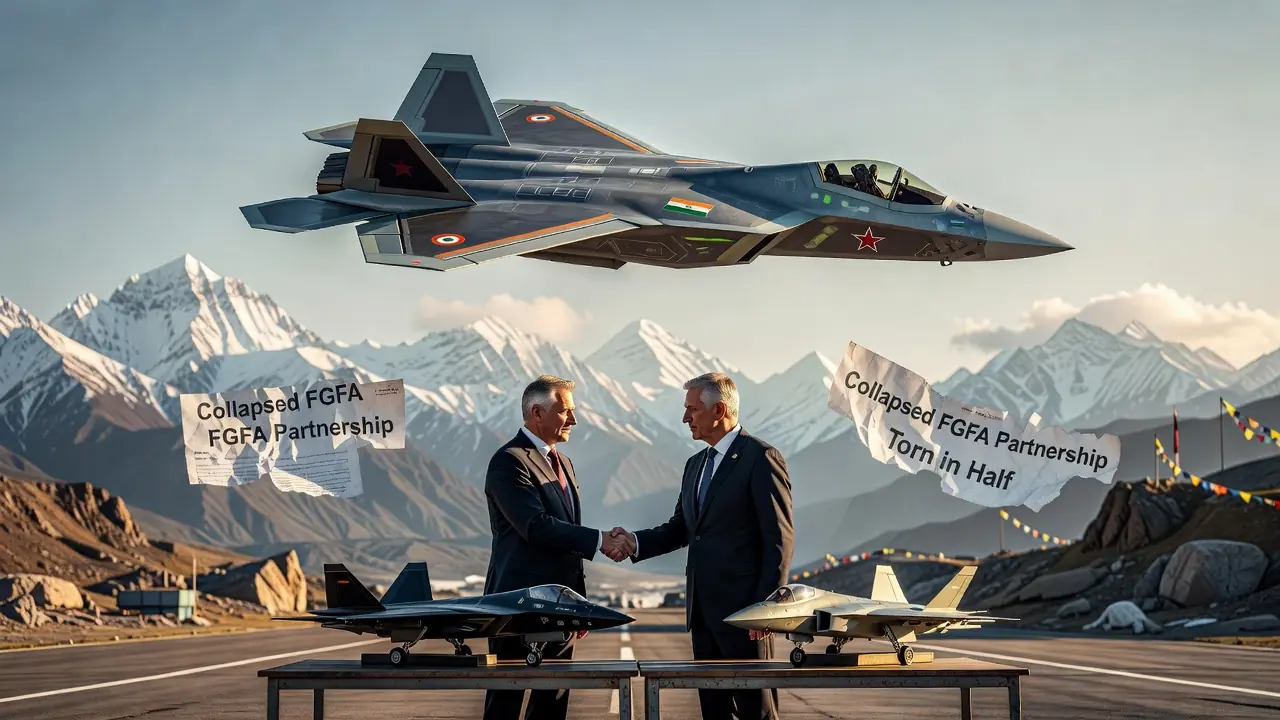
Moscow is once again courting New Delhi with its Su-57 Felon, pairing the fifth-generation fighter with offers of technology transfer and local manufacturing. India has not taken the bait. The renewed pitch arrives years after India walked away from a joint development programme with Russia, and the reasons for that exit still shape the current standoff.
A Partnership That Collapsed Once Already
India and Russia once worked together on what became known as the Fifth Generation Fighter Aircraft programme, an Indian variant built on the same platform as the Su-57. India withdrew in 2018, citing dissatisfaction with the aircraft's stealth characteristics, engine performance, and the overall cost of participation. That history matters now. A government that exited a joint programme over unresolved technical concerns is unlikely to return as a customer unless those same concerns have been clearly addressed. Russia has not offered public evidence that they have.
Unanswered Questions on Numbers and Combat Use
The Su-57 remains one of the least transparent fighter programmes among major powers. Production figures have been modest and inconsistent with the scale typically associated with a frontline fifth-generation fleet. Delivery timelines to Russia's own air force have also drawn scrutiny, raising doubts about Moscow's capacity to support a large export and co-production arrangement. The aircraft's combat record, where it has reportedly seen limited operational use, remains contested and difficult to verify independently. For a country like India, which is weighing a multi-decade procurement decision, that lack of clarity is a serious obstacle rather than a minor caveat.
The AMCA Factor
Russia frames the Su-57 as a practical bridge - something India could operate while its own Advanced Medium Combat Aircraft programme matures. India's posture suggests it sees things differently. New Delhi has placed its strategic bet on building indigenous fifth-generation capability through the AMCA, even though that programme carries its own timeline risk and will take years to reach operational squadrons. Accepting a Russian aircraft now, especially one carrying the baggage of the failed FGFA collaboration, could complicate that long-term indigenous push, both politically and industrially.
What This Signals Beyond the Aircraft Itself
The Su-57 episode reflects a broader pattern in defence technology diplomacy: suppliers offering co-production and technology-sharing as leverage to revive stalled deals, while buyers weigh sovereignty, reliability, and long-term strategic autonomy against short-term capability gaps.
- India's 2018 exit was driven by stealth, engine, and cost concerns that remain unresolved in public discourse.
- Su-57 production and delivery numbers continue to raise questions about export feasibility.
- India's commitment to AMCA signals a preference for indigenous control over imported fifth-generation technology.
- Russia's offer of local production has not been enough to overcome trust deficits built during the earlier partnership.
Until Moscow can address the technical and transparency gaps that drove India away in the first place, repeated offers are likely to meet the same answer Delhi has given for years: not now, and not on these terms.