
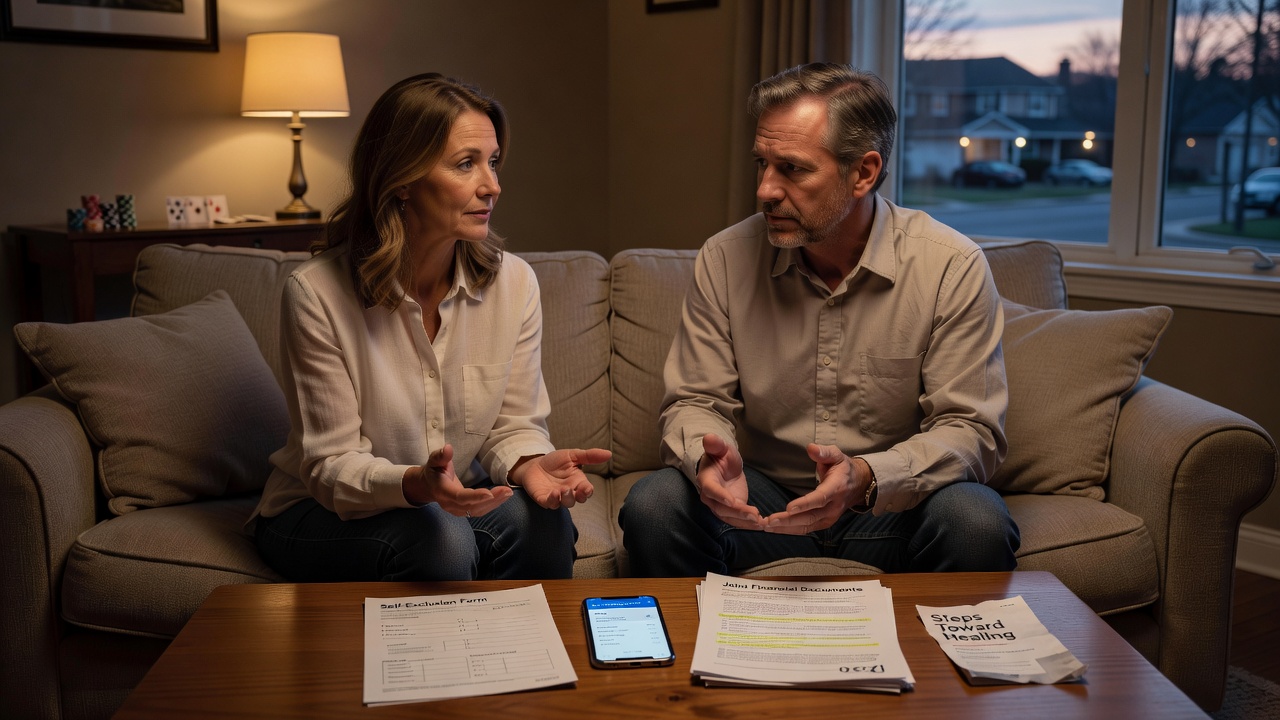
Gambling harm rarely announces itself. It builds quietly through missed payments, withdrawn behaviour and small lies, until the people closest to the gambler are left wondering whether to speak up. Staying silent carries real risk: relationship breakdown, debt, job loss and mental health crises, including suicide, are all documented consequences of unaddressed gambling problems. Raising the subject early, carefully and without judgment gives someone the best chance of getting help before the damage compounds.
Why the Approach Matters as Much as the Message
Gambling disorder shares features with other addictive behaviours: denial, minimisation and shame are common responses when someone is confronted. This is not a character flaw unique to gambling - it reflects how addiction affects judgment and self-perception. Choosing a calm, private moment to talk, rather than reacting in the heat of an argument, significantly changes how the conversation is received. People who feel blamed tend to become defensive; people who feel cared for are more likely to stay in the conversation, even if they do not open up immediately.
It helps to prepare for a range of reactions, from relief to anger. Some individuals will deny there is an issue or blame external circumstances. Others may go quiet. None of these responses mean the conversation failed - they are part of a process that often takes weeks or months, not a single discussion.
What Support Actually Looks Like in Practice
Effective support tends to follow a sequence: express concern without accusation, listen without interrupting, and then explore solutions together rather than imposing them. Describing specific observed changes - withdrawal from hobbies, unexplained money troubles, persistent cash shortages - is more productive than general accusations. Asking open questions, such as what the person thinks an appropriate next step might be, keeps the conversation collaborative rather than confrontational.
- Avoid labelling someone "a problem gambler" or lecturing repeatedly - repetition without listening tends to shut communication down.
- Avoid prescribing solutions unless invited; shared decision-making is more durable than imposed rules.
- Recognise that self-help tools, peer support and structured treatment serve different needs depending on severity.
For less entrenched gambling behaviour, self-directed tools and peer support networks can be effective first steps. For more severe patterns, professional treatment services are generally recommended, and a supportive person can play a meaningful role simply by helping someone locate and access that support.
Tools and Practical Measures
Several support mechanisms are widely used across jurisdictions, including self-exclusion schemes that allow individuals to formally bar themselves from gambling venues or platforms, and tracking tools that let players monitor time and money spent. These exist precisely because gambling environments - whether physical venues or digital platforms - are designed to encourage continued play, and self-regulation without structural support is often insufficient on its own.
Financial safeguards also matter. Setting agreed spending limits, separating access to shared accounts, or temporarily managing finances jointly can reduce opportunities for harm while someone works on recovery. These arrangements work best when negotiated together rather than imposed, and when paired with professional counselling rather than used as a standalone fix.
The Wider Responsibility Question
Individual conversations sit within a broader system. Operators, regulators and payment providers increasingly face scrutiny over how gambling products are designed, marketed and monitored for signs of harm. Features like self-exclusion registers, deposit limits and play-tracking cards exist partly because personal willpower alone is not considered a reliable safeguard against commercially optimised gambling products. Supporting someone close to you with a gambling problem is, in that sense, also a reminder that responsible gambling is a shared obligation - spanning family, treatment services, and the industry itself.