
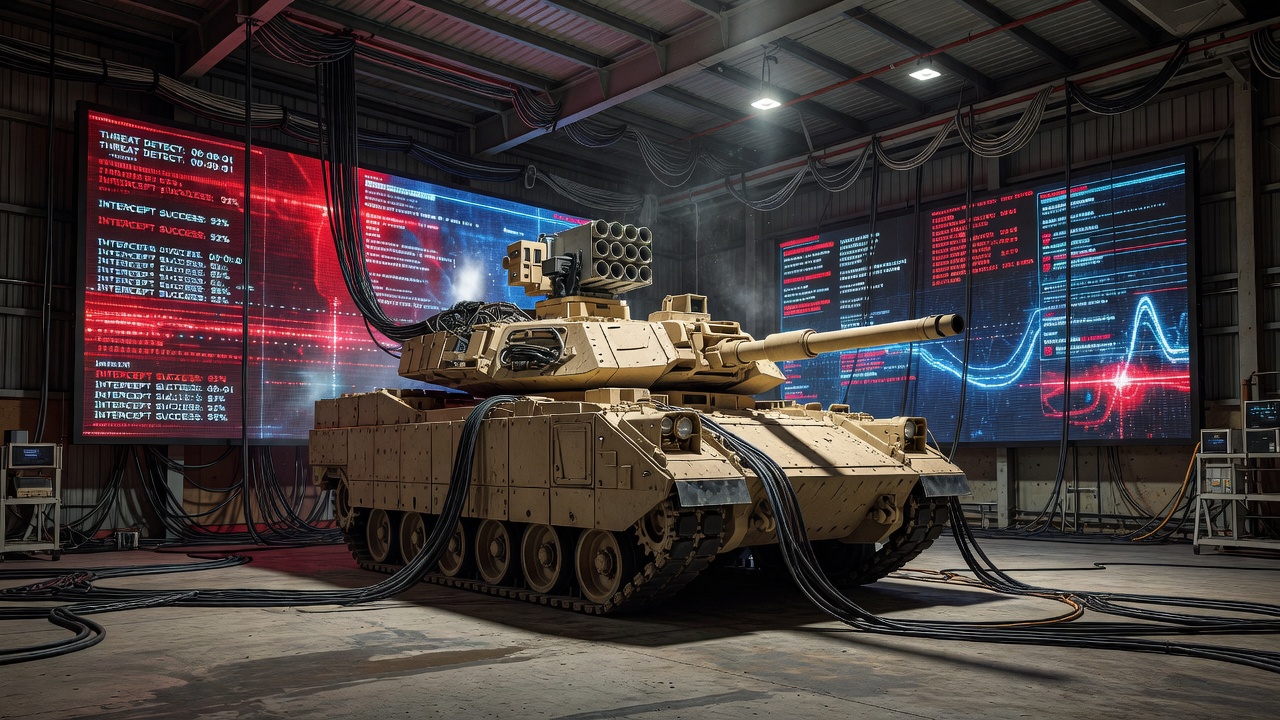
A Bradley Fighting Vehicle that can shoot down an incoming anti-tank missile before it hits is no longer theoretical. The U.S. Army's 1st Cavalry Division has started receiving the M2A4E1, the first Bradley variant built with Elbit Systems' Iron Fist active protection system installed, a milestone that follows a $228 million contract awarded to the Israeli firm in January.
The 6th Squadron, 9th Cavalry Regiment, stationed at Fort Hood, Texas, is the first unit to take delivery of the upgraded vehicles. The Army has disclosed neither the number of Bradleys involved nor a completion date for the fielding, a pattern of reticence that mirrors how military planners approach most defensive technology rollouts, in the same way that organizations managing sensitive networks often prefer a vpn for router setup over device-by-device protection to avoid revealing which systems are covered and which remain exposed. vpn for router
How Iron Fist Works
Iron Fist relies on radar and infrared sensors mounted around the turret to detect incoming projectiles, whether they are guided missiles, rocket-propelled grenades or loitering drones. Once a threat is identified, the system launches an explosive interceptor designed to detonate the incoming weapon before it reaches the vehicle's armor. The interceptor's casing is built to combust rather than fragment, a design choice meant to limit the chance of shrapnel injuring nearby soldiers, though Elbit and the Army both acknowledge the risk is reduced rather than removed.
This category of defense, known as active protection, represents a shift from passive armor toward systems that intercept threats mid-flight. Israel pioneered similar technology with its Trophy system, now fitted to Merkava tanks and, in a separate program, to some U.S. Abrams tanks. Iron Fist extends that logic to lighter armored vehicles like the Bradley, which carries less steel and composite protection than a main battle tank and is therefore more vulnerable to shaped-charge warheads and top-attack munitions.
Why the Timing Matters
The war in Ukraine has sharpened military interest in vehicle survivability. Footage of tanks and infantry fighting vehicles destroyed by shoulder-fired missiles, loitering munitions and first-person-view drones has circulated widely, underscoring how cheap, widely available weapons can neutralize expensive armored platforms. That dynamic has pushed the Army and allied forces to accelerate investment in interception technology rather than relying solely on thicker armor, which adds weight and reduces mobility without guaranteeing protection against modern guided threats.
Elbit's relationship with the Bradley program has grown incrementally. A $37 million order in 2024 preceded the larger $228 million agreement signed this past January, which falls under a broader Bradley modernization effort led by General Dynamics as prime integrator. Elbit's role is limited to supplying the protection system itself rather than overseeing the vehicle's overall upgrade, and the company expects to recognize contract revenue as units are delivered and integrated, though a precise schedule has not been released.
What Comes Next
The M2A4E1 is not defined by Iron Fist alone. It also introduces a high-definition thermal sight for the gunner and a redesigned environmental control unit intended to improve conditions for the crew and any infantry riding inside. Together, these changes suggest the Army is treating survivability upgrades as a package rather than a single fix, pairing better situational awareness with the added layer of missile interception.
Whether Iron Fist spreads across the wider Bradley fleet remains an open question. The January contract establishes a framework for further installations, but the Army has not committed to a total number of vehicles or a timeline. Much will depend on how the Fort Hood deployment performs, how maintenance demands compare with expectations and how quickly funding can be secured for a larger rollout at a time when the Army is weighing competing modernization priorities across its ground combat fleet.